Brass fittings join, control and divert flow in piping systems in the plumbing, HVAC, and industrial industries. Made of a blend of copper and zinc, this alloy provides brass fittings with the strength and corrosion resistance that plumbers and contractors rely on every day. In this blog, we will introduce you to what brass fittings are, common uses, types, properties, and advantages that make brass fittings a preferred choice in India and across the globe.
What Are Brass Fittings?
Brass fittings connect pipes or tubes using an alloy made from copper and zinc. Manufacturers shape them into elbows, tees, couplings, and dozens of other forms to suit specific applications. The copper-to-zinc ratio varies by grade, and that ratio directly affects strength and corrosion resistance.
Brass delivers mechanical strength, easy machinability, and non-magnetic properties. Residential plumbers and industrial engineers both depend on it for piping systems that need to last decades, not years.
Uses of Brass Fittings
Brass fittings are used in heating, ventilation and air conditioning systems to create leak-proof connections.
1. Plumbing Systems
Residential and commercial plumbing systems use brass fittings extensively, especially in hot water lines. Brass withstands sustained high temperatures without weakening, which keeps hot water delivery systems running for years without fitting failure.
2. HVAC Systems
Brass fittings are used in heating, ventilation and air conditioning systems to create leak-proof connections. Thermal cycling is hard on weaker materials quickly but brass stands up to that fatigue cycle after cycle.
3. Gas Lines
Natural gas and propane systems use brass fittings because of their tight sealing properties. Residential kitchens and commercial kitchens both rely on this seal integrity to prevent gas leaks.
4. Automotive and Marine Applications
Saltwater and chemical exposure destroy weaker metals within a few seasons. Brass fittings resist both, which is why automotive fuel lines, cooling systems, and marine engines use them in fuel and coolant circuits.
5. Industrial Equipment
Manufacturing machinery, hydraulic systems, and pneumatic systems all use brass fittings to control fluid flow. Precision matters here, and brass holds tight tolerances under repeated pressure cycles.
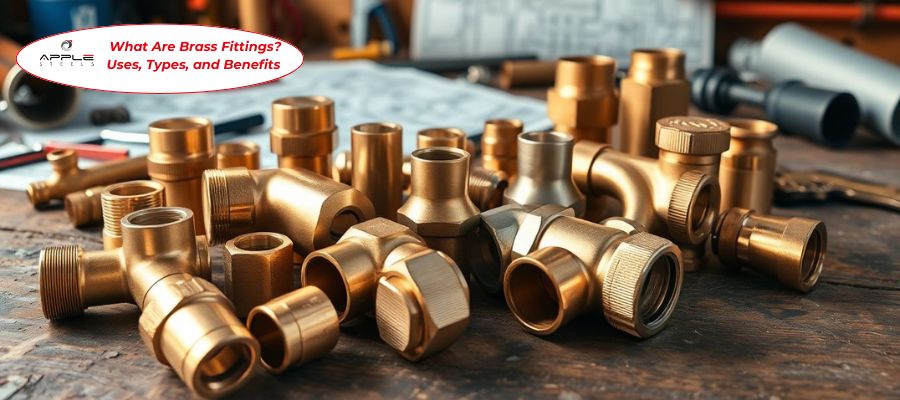
Types of Brass Fittings
Different connection and flow requirements call for different fitting types.
1. Brass Elbows
Elbows change piping direction at 45° or 90° angles. Tight spaces where pipe rerouting is necessary depend on this fitting type.
2. Brass Tees
Shaped like a “T”, these fittings allow the flow to split into two directions or combine from two sources into one.
3. Brass Couplings
Couplings connect two pipes of the same diameter in a straight line. Compression and threaded versions cover most residential and commercial jobs.
4. Brass Adapters
Adapters connect pipes of different sizes or types using male or female threads. Plumbing and gas systems use adapters when transitioning between pipe standards.
5. Brass Nipples
Short brass pipe sections with male threads on both ends, nipples connect two female-threaded fittings or pipes.
6. Brass Bushings
Bushings reduce pipe opening size. Threading on both ends lets them connect two different-sized fittings or pipes.
7. Brass Compression Fittings
Compression fittings seal water and gas systems without soldering. Installation and removal take minutes, not hours, which matters on repair jobs.
Properties of Brass Fittings
Brass fittings carry a specific set of material properties that explain why they outperform alternatives in demanding piping applications.
Corrosion Resistance: Brass fittings resist corrosion from water, gases, and a wide range of fluids, which suits them to both indoor and outdoor installations.
Durability: Brass can withstand high pressure, changes in temperature and mechanical stress without cracking or weakening with time.
Malleability: Brass can be easily shaped and formed into complex fittings, giving manufacturers the flexibility to create precise, custom geometries.
Superior Sealing: Brass fittings that are installed properly make leak-free connections, an important consideration in gas, water and fuel line applications.
Benefits of Brass Fittings
Brass outperforms plastic, standard steel, and even stainless steel in several piping scenarios.
Corrosion resistance
Brass does not rust, and it holds up against water and most chemicals for 20 years or more.
High Durability
Durability follows close behind. Brass fittings resist cracking and brittleness even after years of thermal cycling and pressure loading.
Excellent Temperature and Pressure Handling
Temperature and pressure handling set brass apart from plastic fittings, which soften and fail under heat. Hot water lines, HVAC loops, and industrial process lines all lean on this thermal stability.
Leak-Resistant Seals
The tight threading of the brass fittings makes leak-resistant seals, which is most important in petrol and fuel systems, where even a small leak is a safety hazard.
Versatility
Brass also machines easily, so manufacturers produce custom fittings and precision designs without sacrificing quality.
Recyclability
Brass is 100% recyclable and can be used in sustainable construction and manufacturing practices without sacrificing the performance of the material.
Brass Fittings vs. Other Materials
Brass fittings deliver the strongest combination of longevity and reliability when both factors matter for the application. Below is a direct comparison.
| Property | Brass Fittings | Plastic Fittings | GI Fittings |
| Corrosion Resistance | Excellent | Good | Moderate |
| Durability | High | Moderate | High |
| Temperature Handling | Excellent | Poor | Moderate |
| Cost | Moderate | Low | Moderate |
| Lifespan | 20+ years | 5–10 years | 10–15 years |
Latest Brass Fittings Price List
Brass fitting prices shift with copper and zinc market rates, fitting size, thread type, and order volume. Bulk orders typically bring per-unit costs down, while custom or specialty fittings run higher than standard stock sizes. Apple Steels manufacture and supply brass fittings. We offer a wide range of products in standard and custom specifications at competitive prices. Click here to get the latest Brass Fittings price list in India.
Tips for Choosing Brass Fittings
Always check the pipe material and size to choose the correct type of fitting. Use fittings rated and tested for gas and high pressure applications. Use lead-free fixtures in plumbing work to protect drinking water. Always check the finish and quality of the threads on each fitting before you install it. Mismatched connections can leak.
Conclusion
Brass fittings are corrosion resistant, tolerant of high temperatures, leak resistant in sealing, and have a service life of 20+ years in plumbing, gas, HVAC and industrial systems. Contractors, plumbers and homeowners who know about the types, properties, and benefits discussed here can make informed decisions for their next piping project.