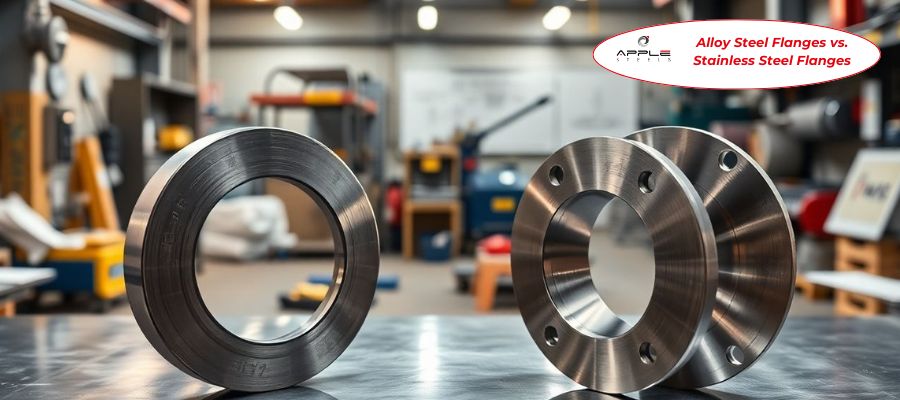
Flanges are essential components in piping systems, offering secure and leak-proof connections in high-pressure applications. But when it comes to selecting the right type of flange material, two common options come to mind Alloy Steel Flanges and Stainless Steel Flanges.
Both materials have unique properties and applications, making it crucial to understand their differences before deciding which is better for your project. In this blog, we’ll explore the strengths, weaknesses, and typical use cases of each, helping you make an informed decision.
What Are Alloy Steel Flanges?
Alloy steel flanges are made from a mix of carbon steel and alloying elements such as chromium, molybdenum, nickel, and vanadium. These elements enhance the mechanical and chemical properties of the steel, making alloy steel flanges ideal for high-temperature and high-pressure environments.
Key Features:
- High strength and toughness
- Excellent wear and corrosion resistance (varies by alloy)
- Suitable for extreme temperature conditions
- Commonly used in oil and gas, power plants, refineries, and petrochemicals
What Are Stainless Steel Flanges?
Stainless steel flanges are made from steel containing at least 10.5% chromium, which provides corrosion resistance. Depending on the grade, stainless steel may also include elements like nickel and molybdenum.
Key Features:
- Excellent corrosion resistance
- Clean appearance and hygienic properties
- Durable and long-lasting
- Commonly used in food processing, pharmaceuticals, water treatment, and chemical industries
Alloy Steel Flanges vs. Stainless Steel Flanges: Key Differences
Let’s break down the comparison across several important factors:
1. Corrosion Resistance
- Stainless Steel Flanges are known for their superior corrosion resistance, especially in environments exposed to moisture, chemicals, and acidic conditions.
- Alloy Steel Flanges offer moderate corrosion resistance. However, their strength lies more in handling high temperatures and pressures than in resisting corrosion.
2. Strength and Toughness
- Alloy Steel Flanges are typically stronger and tougher, thanks to added elements like molybdenum and chromium. These flanges are engineered for harsh conditions such as high heat or extreme pressure.
- Stainless Steel Flanges offer good strength but may not match the toughness levels of alloy steel, particularly in high-pressure situations.
3. Temperature Resistance
- Alloy Steel performs exceptionally well in high-temperature environments. Grades like A182 F11 or F22 are specifically used in boilers and heat exchangers.
- Stainless Steel can handle heat to a certain extent, but prolonged exposure to high temperatures may affect its structural integrity, especially in lower grades.
4. Cost
- Stainless Steel Flanges are generally more expensive due to the higher cost of raw materials and the corrosion-resistant alloying elements.
- Alloy Steel Flanges tend to be more economical, especially in large-scale industrial applications where high strength is prioritized over corrosion resistance.
5. Applications
- Use Stainless Steel Flanges in applications requiring corrosion resistance, such as food processing, pharmaceuticals, and marine environments.
- Use Alloy Steel Flanges in oil & gas, petrochemical, power generation, and heavy engineering industries where high mechanical performance is required.
Pros and Cons Summary
| Feature | Alloy Steel Flanges | Stainless Steel Flanges |
|---|---|---|
| Corrosion Resistance | Moderate | Excellent |
| Strength & Toughness | High | Moderate to High |
| Temperature Resistance | Excellent | Good |
| Cost | Lower | Higher |
| Ideal Applications | Oil, Gas, Power Plants | Chemical, Food, Marine |
When Should You Choose Alloy Steel Flanges?
Choose alloy steel flanges when:
- Your system operates under high pressure or temperature
- You need durability and mechanical strength
- Cost-efficiency is a priority
- The environment isn’t highly corrosive
Common industries that rely on alloy steel flanges include:
- Oil and gas
- Power generation
- Chemical refineries
- Pulp and paper mills
When Should You Choose Stainless Steel Flanges?
Go for stainless steel flanges when:
- The system will face corrosive agents like saltwater, chemicals, or acids
- You need a hygienic and easy-to-clean surface
- Longevity and appearance matter
- Strength is important but not the top priority
Stainless steel is perfect for:
- Food and beverage processing
- Marine applications
- Pharmaceuticals
- Wastewater treatment plants
Conclusion: Which One Is Better?
There’s no one-size-fits-all answer. The better flange material depends entirely on your project’s specific requirements.
- Choose Alloy Steel Flanges for high-strength, high-temperature, and high-pressure environments.
- Choose Stainless Steel Flanges for corrosion resistance, hygiene, and aesthetic requirements.
Understanding these differences will help you avoid premature failures and ensure long-term performance in your piping systems.
If you’re still unsure, consult a flange supplier or materials engineer to match the right flange type to your exact operating conditions.