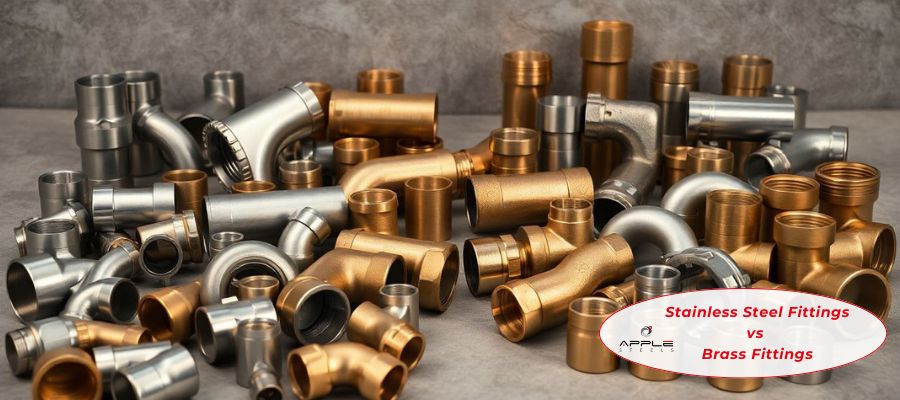
When it comes to choosing the right material for your pipe fittings, tubing, or plumbing projects, stainless steel fittings vs brass fittings is a common dilemma. Both materials are popular, durable, and reliable, but they come with distinct characteristics that can make a significant difference depending on the application. In this article, we will explore the differences between brass vs steel, their applications in various industries, and which material is the right choice for your project.
What Are Stainless Steel and Brass Fittings?
Stainless steel fittings and brass fittings are used to connect, seal, and direct the flow of liquids and gases through pipes or tubes. These fittings are commonly found in plumbing systems, water supply systems, heating, and cooling applications. Both materials offer unique properties that make them suitable for different conditions.
- Stainless Steel Fittings: Made from a blend of iron, chromium, and other elements, stainless steel fittings are known for their superior corrosion resistance, strength, and durability. Threaded stainless steel fittings are commonly used in high-pressure systems where strength and reliability are crucial.
- Brass Fittings: Brass is an alloy of copper and zinc, providing excellent corrosion resistance, especially against water and moisture. Brass pipe fittings are typically used in plumbing systems, including residential and commercial brass plumbing fittings, due to their malleability and resistance to corrosion.
Stainless Steel vs Brass: Key Differences
Understanding the differences between stainless steel and brass fittings can help you make the right choice for your specific needs.
1. Corrosion Resistance
- Stainless Steel: Known for its ability to withstand rust and corrosion, stainless steel is ideal for use in harsh environments, especially where exposure to chemicals, extreme temperatures, and moisture is common. The corrosion-resistant properties make it a great choice for industrial applications, including pipe fittings in water treatment plants and chemical processing.
- Brass: Brass is highly resistant to corrosion caused by water and moisture, making it a popular choice for brass fittings plumbing applications. However, it may corrode under certain conditions, especially in systems with high-pressure or high-temperature fluids.
2. Strength and Durability
- Stainless Steel: Stainless steel is renowned for its superior strength and durability, making it ideal for applications requiring high pressure and temperature resistance. Stainless steel fittings are widely used in heavy-duty industries, such as oil and gas, automotive, and aerospace, where robust performance is necessary.
- Brass: Brass is generally softer than stainless steel, meaning it can be more easily damaged under high stress or pressure. However, its malleability makes it easier to work with in certain applications, like brass pipe fittings in residential plumbing systems.
3. Cost
- Stainless Steel: Typically, stainless steel fittings are more expensive than brass fittings due to their higher manufacturing costs and superior performance characteristics. However, the longevity and durability of stainless steel can offset the initial higher cost in long-term applications.
- Brass: Brass is generally more affordable and is commonly used in applications where cost is a significant factor. Brass fittings bathroom or for garden hoses with brass fittings are examples of cost-effective solutions.
4. Applications
- Stainless Steel Fittings: Stainless steel is favored for applications requiring higher strength and resistance to wear and tear. Some common uses of stainless steel fittings include:
- Tubing fittings in high-pressure environments.
- Stainless steel fittings for gas pipelines.
- Threaded stainless steel fittings in industrial systems.
- Brass Fittings: Brass is often used in lower-pressure systems where ease of installation and cost-effectiveness are key. It is commonly found in:
- Brass plumbing fittings for household installations.
- Brass fittings bathroom for sinks, showers, and faucets.
- Garden hose with brass fittings for residential irrigation systems.
Choosing Between Stainless Steel and Brass for Your Project
The decision to use stainless steel or brass fittings depends on various factors, including the environment, pressure, and cost considerations. Here are some tips to help you decide:
- For high-pressure systems: If you need fittings that can handle extreme pressure and temperature, stainless steel fittings are the way to go. They are built to last and resist corrosion in challenging conditions.
- For plumbing applications: If you are working on a residential or commercial brass fittings plumbing system, brass fittings are an excellent choice due to their ease of installation, resistance to water corrosion, and cost-effectiveness.
- For aesthetic purposes: If you are working on a project where appearance matters, such as in a brass fitting bathroom or kitchen, brass provides a warm, golden hue that adds a touch of elegance. Stainless steel has a more modern, sleek look.
- For versatility: Brass or stainless steel? Both materials offer versatility in different applications, but brass is particularly well-suited for residential and low-pressure systems, while stainless steel excels in industrial-grade fittings.
Common Uses for Stainless Steel and Brass Fittings
- Tubing and Fittings: Whether you’re working with tubing fittings for medical, chemical, or food processing industries, stainless steel is often preferred due to its sanitary and durable nature. Brass tubing fittings are often used in lighter applications like water and gas systems.
- Pipe Fittings: Both brass pipe fittings and stainless steel pipe fittings are used in various industries, but stainless steel is often chosen for its ability to handle high temperatures and pressures, while brass is used more commonly for household plumbing.
- Threaded Fittings: Threaded stainless steel fittings are crucial for systems that require tight seals and robust connections, whereas brass fittings can often be used in less demanding systems where ease of installation is important.
Conclusion: Stainless Steel or Brass?
When choosing between brass or stainless steel, it ultimately depends on the specific requirements of your project. Stainless steel fittings are the ideal choice for high-pressure, high-temperature applications, while brass fittings plumbing systems or brass plumbing fittings are more suitable for residential and light-duty applications.
For projects requiring durability, strength, and long-term performance, stainless steel fittings will be your best bet. On the other hand, for projects focused on cost-effectiveness, ease of installation, and corrosion resistance in lighter applications, brass fittings should be your go-to choice.
No matter which material you choose, understanding the unique properties of brass vs steel, tube fitting, tubing and fittings, pipe fittings, and other considerations will ensure you make the right decision for your project.