When it comes to selecting the right material for manufacturing, construction, or industrial applications, the choice between aluminium and stainless steel is one of the most crucial. Both metals are widely used in the form of sheets, plates, and coils, and each offers unique advantages. But how do you decide which is best suited for your needs?
This guide explores the differences between aluminium and stainless steel in detail to help you make an informed decision.
Understanding the Basics of Aluminium and Stainless Steel
Before diving into comparisons, it’s important to understand what these metals are and how they’re used.
What Are Aluminium Sheets, Plates, and Coils?
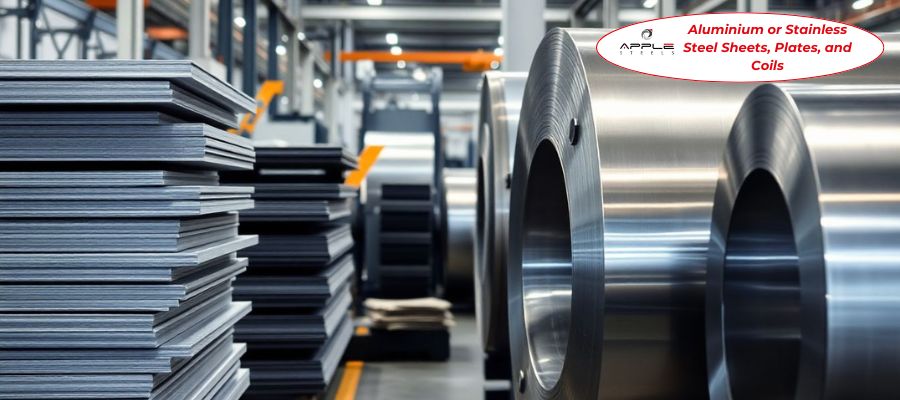
Aluminium sheets, plates, and coils are flat-rolled products made from aluminium alloy. Sheets are thinner and used in lightweight applications, while plates are thicker and ideal for structural purposes. Coils are continuous rolls used for mass production in industries like automotive, packaging, and HVAC.
Aluminium is known for being lightweight, corrosion-resistant, thermally conductive, and easy to form. Common alloys like 6061 and 5052 are used for strength, durability, and flexibility.
What Are Stainless Steel Sheets, Plates, and Coils?
Stainless steel is an iron-based alloy containing chromium, which gives it excellent corrosion resistance. Sheets and plates vary in thickness, while coils are used for industrial processing, appliances, and fabrication.
Stainless steel sheets, plates, and coils are popular for their strength, resistance to chemicals, high-temperature performance, and low maintenance. Grades like 304 and 316 are widely used across industries.
Key Differences Between Aluminium and Stainless Steel
While both metals have overlapping applications, they differ significantly in several performance areas.
Strength and Durability
Stainless steel is much stronger and more durable than aluminium. It can handle higher loads and resist wear and tear, making it suitable for demanding structural applications.
Weight and Density
Aluminium is about one-third the weight of stainless steel. This makes it the ideal choice for applications where reducing weight is essential, such as in transportation, aerospace, and mobile structures.
Corrosion Resistance
Both metals offer excellent corrosion resistance, but in different ways. Aluminium forms a natural oxide layer that protects it, while stainless steel resists corrosion due to its chromium content. However, 316 stainless steel outperforms aluminium in coastal and marine environments.
Cost and Availability
Aluminium is generally less expensive than stainless steel in terms of raw material costs. However, stainless steel’s longer service life and lower maintenance may make it more cost-effective in the long term. Availability of both depends on grade and location.
Workability and Fabrication
Aluminium is easier to cut, shape, and weld, especially in thin sections. Stainless steel is harder and requires more powerful tools but offers cleaner, more durable welds once fabricated.
Thermal and Electrical Conductivity
Aluminium is an excellent conductor of heat and electricity, which is why it’s preferred in electrical applications and heat exchangers. Stainless steel is not as conductive but offers better resistance in high-temperature environments.
Aesthetic and Surface Finishes
Aluminium offers a clean, bright finish and can be anodized for extra durability and color options. Stainless steel comes in polished, brushed, or mirror finishes and is known for its high-end appearance in architectural applications.
Industry Applications and Use Cases
Different industries rely on these materials based on specific requirements.
Construction and Architecture
Aluminium sheets and coils are used in cladding, roofing, and window frames due to their light weight and corrosion resistance. Stainless steel plates are preferred for structural elements and decorative finishes due to their strength and shine.
Automotive and Aerospace
Aluminium is heavily used in cars, aircraft, and trains to reduce weight and improve fuel efficiency. Stainless steel is used in exhaust systems, fasteners, and components exposed to heat or vibration.
Food and Medical Equipment
Stainless steel’s non-reactive surface makes it ideal for food processing, kitchen equipment, and medical tools. It meets hygiene standards and resists chemical corrosion.
Marine and Coastal Environments
316 stainless steel is the best option for saltwater and high-humidity environments. Aluminium can be used but requires protective coatings to prevent corrosion.
Manufacturing and Fabrication
Aluminium coils are preferred in HVAC systems and appliance housings due to their conductivity and ease of shaping. Stainless steel sheets are used in tanks, machinery, and processing units that face harsh conditions.
How to Choose the Right Material
Choosing between aluminium and stainless steel depends on multiple factors:
- Weight considerations: Choose aluminium for lightweight designs
- Corrosion resistance: Use stainless steel in harsh or salty environments
- Strength needs: Stainless steel is better for load-bearing components
- Cost limitations: Aluminium offers lower upfront costs
- Aesthetic goals: Stainless steel provides a more polished look
- Workability: Aluminium is easier to form and weld
Always evaluate your project’s specific requirements before making a decision.
Conclusion
Both aluminium and stainless steel sheets, plates, and coils offer unique benefits, depending on the application. Aluminium is lightweight, cost-effective, and easy to work with, while stainless steel is durable, corrosion-resistant, and ideal for high-strength applications.
Understanding the differences in performance, cost, and application helps in making the right material choice. If you need help selecting or sourcing these products, our experts can guide you through the process.