Lead flanges are components commonly found in plumbing systems to connect pipes or valves together, with lead being particularly notable due to its corrosion-resistance capabilities making them suitable for applications where exposure to acidic substances are an issue, thus prolonging and providing durability across many environments where other materials might degrade over time.
Lead flanges stand out among industrial products due to their easy machinability; this characteristic allows them to be cut, bent or altered as necessary, providing precise customization according to project needs and increasing versatility and adaptability across a wide variety of industrial applications.
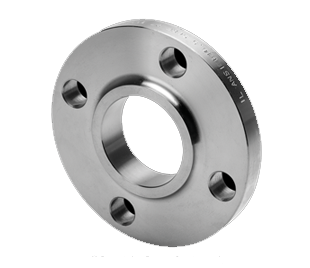
Lead flanges offer outstanding weldability, making secure connections between pipes and components in a piping system more reliably than ever. Their weldability facilitates leak-proof joints for maximum system integrity. Welding lead flanges is also an effortless process allowing seamless installation and maintenance procedures to occur with minimal downtime and fuss.
Lead flanges find widespread application across industries including chemical processing, wastewater treatment and mining due to their unique properties and capabilities. Lead flanges often find use when transporting aggressive chemicals like acids or corrosion-prone fluids through pipes; their ease of machining or welding makes them attractive options for custom fabrication projects.
Lead flanges have long been used by industries spanning automotive manufacturing, construction and electronics. As vital parts of fluid handling systems requiring reliable connections such as hydraulic or pneumatic applications, lead flanges play an essential part. Their corrosion-resistance makes them suitable for outdoor installations exposed to harsh environmental conditions.
Lead flanges play an essential part in medical equipment manufacturing, helping ensure fluid delivery systems function effectively and reliably. Their corrosion resistance, machinability, and weldability make them perfect for applications involving gas pipelines, pharmaceutical processing facilities, laboratory applications, or weldability for secure connections that minimize risks such as leakages or contamination.
Lead flanges find many applications in marine engineering for use onboard ships and offshore structures, where their corrosion-resistant nature makes them indispensable components. Their resistance to seawater corrosion makes lead flanges an integral component in construction and maintenance projects in this sector, from fuel lines to cooling systems, lead flanges help ensure reliable operation across an array of equipment and infrastructure systems onboard vessels and offshore structures.

Raw Material
At the very first process, the system controls check the quality of supplies raw materials as per the test certificate and also visual and dimension.

Material Inspection
Incoming quality control (IQC) is the process of observes the quality of materials and parts for manufacturing a product before production starts.

Material Cutting
In this process refers to manufacturing flanges by cutting stripes from the middle plate and then rolling them into round shape.

Flange Forging
Forged flanges generally have lower carbon content than cast flanges and are less disposed to rust. In Forgings Material Grade Check, weight measuring, and control the temperature.

Final Inspection
In this method measure & inspect the dimension & size of the flange. The diameter is check to control what size pipe a flanges can be used.
| Standard | - |
| Dimensions | ANSI/ASME B16.5, B16.47 Series A & B, B16.48, BS4504, BS 10, EN-1092, DIN, ANSI Flanges, ASME Flanges, BS Flanges, DIN Flanges, EN Flanges, GOST Flange, ASME/ANSI B16.5/16.36/16.47A/16.47B, MSS S44, ISO70051, JISB2220, BS1560-3.1, API7S-15, API7S-43, API605, EN1092 |
| Flange Size Chart | 1/2" (15 NB) to 48" (1200NB), DN10~DN5000 |
| Pressure Rating | Class 150 LBS, 300 LBS, 600 LBS, 900 LBS, 1500 LBS, 2500 LBS |
| Pressure Calculation in DIN | 6Bar 10Bar 16Bar 25Bar 40Bar / PN6 PN10 PN16 PN25 PN40, PN64 |
| JIS | 16 K, 5K, 10 K, 20 K, 30 K, 40 K, 63 K |
| Flange Connection / Flange Face Type | Raised Face (RF), Ring Type Joint (RTJ), Flat Face (FF), Large Male-Female (LMF), Lap-Joint Face (LJF), Small Male-Female (SMF), Small Tongue, Large Tongue & Groove, Groove, Flange Pipe. |
| Origin | West Europe / Japan / Indian / USA / Korean |
| Types of Flanges | Threaded / Screwed / Forged / Plate |
| Coating | Yellow Transparent, Zinc Plated, Anti-rust Paint, Oil Black Paint, Cold and Hot Dip Galvanized |
| Test Of Flange | Direct-reading Spectrograph, Ultrasonic flaw detector, Magnetic particle detector, X-ray detector, Hydrostatic testing machine. |
| Production technique Used | Heat treated, Forged and Machined |
| Equipment | Press machine, Bending machine, Pushing Machine, Sand-blasting machine, electric bevelling machine etc. |
| Test Certificates | EN 10204/3.1B, Raw Materials Certificate, 100% Radiography Test Report, Third Party Inspection Report, etc |

Electrical Industry

Automotive Industry

Construction Industry

Defence Industry

Pharmaceutical Industry

Petroleum Industry

Petrochemical Industry

Milk & Dairy Industry
Liechtenstein, Denmark, Ukraine, Finland, Portugal, Belarus, Latvia, Estonia, Monaco, Germany, Moldova, Lithuania, Switzerland, Poland, Turkey, Ireland, Luxembourg, Austria, Slovakia, Hungary, Italy, Sweden, Croatia, Norway, Serbia, Malta, Bulgaria, Romania, Netherlands, United Kingdom, Czechia/Czech Republic, Azerbaijan, Russia, Cyprus, Belgium, Spain, Greece, France.
Russia, North Korea, Qatar, Oman, Armenia, Philippines, Iraq, Vietnam, Mongolia, United Arab Emirates, Thailand, Israel, Singapore, India, Kuwait, Jordan, Myanmar, Turkey, Hong Kong, Kyrgyzstan, Macau, Afghanistan, Taiwan, Egypt, Bangladesh, Japan, Nepal, Maldives, Saudi Arabia, Malaysia, Lebanon, British, Azerbaijan, Sri Lanka, Indonesia, South Korea, Bahrain, Iran, China, Bhutan.
Zimbabwe, Eswatini, Tanzania, Namibia, Mauritius, Kenya, Madagascar, Senegal, Morocco, Uganda, Cameroon, Libya, Mozambique, Nigeria, Algeria, Seychelles, Rwanda, Niger, South Africa, Burundi, Liberia, Botswana, Burkina Faso, Zambia, Angola, Tunisia, Central African Republic, Gambia, Mauritania, Egypt, Ethiopia.
Saint Vincent and the Grenadines, Ecuador, Uruguay, Barbados, Guatemala, Paraguay, Venezuela., Canada, Peru, Haiti, Colombia, Honduras, Nicaragua, Grenada, Dominica, Brazil, Dominican Republic, Guyana, Belize, United States of America, Trinidad and Tobago, Panama, Saint Lucia, El Salvador, Mexico, Bahamas, Cuba, Suriname, Jamaica, Costa Rica, Antigua and Barbuda, Argentina, Bolivia, Chile.