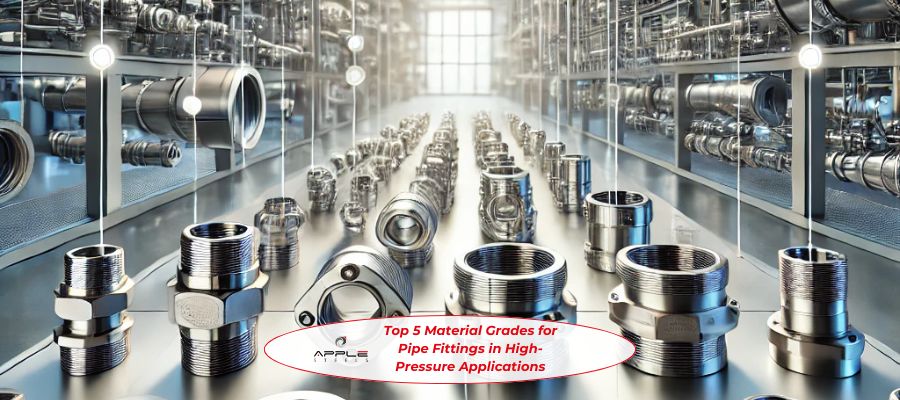
Pipe fittings are essential components in the construction of high-pressure piping systems. These systems are commonly found in industries like oil and gas, chemical processing, aerospace, and power generation, where the safety and efficiency of the piping network are paramount. The material selected for pipe fittings plays a crucial role in the system’s performance, longevity, and ability to withstand high-pressure conditions.
The right material must not only handle extreme pressure but also be resistant to corrosion, erosion, and temperature fluctuations. Here’s an in-depth look at the top 5 material grades commonly used for pipe fittings in high-pressure applications:
1. Stainless Steel 304
Stainless Steel 304 is a widely used austenitic stainless steel that offers a perfect balance of strength, corrosion resistance, and cost-effectiveness. It is the most commonly used material for pipe fittings in high-pressure systems where mild to moderate pressure is applied.
Key Features:
- Corrosion Resistance: Stainless Steel 304 offers excellent resistance to oxidation, reducing the risk of degradation when exposed to corrosive environments, such as water and mild chemicals.
- Mechanical Properties: It retains good mechanical properties even at both high and low temperatures, making it versatile for a wide range of applications.
- Formability: It is easily welded and fabricated, making it ideal for custom fittings in complex piping systems.
Applications:
- Chemical Processing: Stainless Steel 304 is used in various chemical processing systems where moderate pressure is required.
- Food & Beverage Industries: The material is also food-safe and is used in brewing and dairy processing industries.
- Water Treatment: SS 304 is commonly used in water treatment plants where moderate pressure is present.
Limitations: While SS 304 offers a high degree of corrosion resistance, it may not perform well in highly acidic or chloride-rich environments, where pitting corrosion could be an issue.
2. Stainless Steel 316
Stainless Steel 316 is similar to SS 304 but contains molybdenum (2-3%), which significantly enhances its corrosion resistance, particularly in chloride environments. This makes SS 316 the preferred choice in high-pressure applications where exposure to corrosive substances is frequent.
Key Features:
- Superior Corrosion Resistance: The addition of molybdenum gives SS 316 enhanced resistance to corrosion, especially in marine and chloride-rich environments. It can withstand exposure to saltwater, acids, and other aggressive chemicals.
- Heat Resistance: SS 316 maintains its strength at higher temperatures, which makes it ideal for high-pressure steam and hot water systems.
- Mechanical Strength: This grade also offers good mechanical strength, making it capable of handling high-pressure environments with ease.
Applications:
- Pharmaceuticals and Biotech: Used in piping systems for high-pressure steam sterilization.
- Marine Environments: Due to its resistance to seawater corrosion, SS 316 is widely used in marine engineering and offshore oil rigs.
- Chemical & Petrochemical Industries: SS 316 is the material of choice for pipelines transporting highly corrosive chemicals.
Limitations: While SS 316 offers superior resistance to corrosion, it is more expensive than SS 304, which might not justify its use in environments where chloride exposure is minimal.
3. Inconel 625
Inconel 625 is a high-performance nickel-based superalloy known for its outstanding strength, resistance to thermal fatigue, and high-temperature oxidation. It excels in environments where both high pressure and extreme temperatures are present, such as in aerospace or nuclear power systems.
Key Features:
- High-Temperature Resistance: Inconel 625 can operate at temperatures up to 980°C (1800°F) in both oxidizing and reducing environments, making it ideal for extreme high-pressure systems.
- Corrosion Resistance: It is highly resistant to corrosion caused by harsh chemicals, seawater, and high-temperature environments.
- Exceptional Strength: Inconel 625 has high tensile strength, making it suitable for high-pressure applications in industries that require durable, long-lasting materials.
Applications:
- Aerospace and Defense: Used in jet engines, rocket motors, and high-pressure systems that operate under extreme conditions.
- Power Generation: Inconel 625 is commonly used in nuclear power plants and high-temperature systems.
- Chemical Processing: It’s used in systems where corrosion resistance to highly aggressive chemicals is essential.
Limitations: Due to its high cost, Inconel 625 is typically used only in very demanding, high-performance applications where no other material can perform to the same level.
4. Monel 400
Monel 400 is a nickel-copper alloy that offers excellent resistance to a wide range of corrosive conditions, including saltwater and acids. This material is highly effective in environments that require strength and resistance to corrosion without the need for high-temperature resistance.
Key Features:
- Corrosion Resistance: Monel 400 resists corrosion in both freshwater and seawater, as well as many acidic and alkaline solutions, making it ideal for marine applications.
- Mechanical Strength: It exhibits good mechanical properties, including high strength and toughness at both low and high temperatures.
- Ease of Fabrication: Monel 400 can be easily welded and is often chosen for systems requiring custom fittings.
Applications:
- Marine and Offshore: Monel 400 is the material of choice in marine environments, such as in shipbuilding, offshore drilling, and desalination plants.
- Chemical Processing: It is used in handling corrosive chemicals like hydrofluoric acid and sulfuric acid.
- Power Generation: Monel 400 is used in power plants, especially in systems involving seawater cooling and steam generation.
Limitations: Monel 400 is more expensive than many stainless steels, and while it offers excellent corrosion resistance, it is not suitable for extreme temperatures like Inconel.
5. Carbon Steel A105
Carbon Steel A105 is a popular material in high-pressure applications due to its affordability, mechanical properties, and availability. Although not as resistant to corrosion as stainless steel alloys, carbon steel is highly effective in systems where high strength is needed but environmental conditions are less aggressive.
Key Features:
- High Strength: Carbon Steel A105 offers excellent strength and toughness, making it ideal for high-pressure systems in oil, gas, and power generation.
- Cost-Effective: Compared to stainless steels and high-performance alloys, carbon steel is more affordable, making it an economical option for large-scale applications.
- Fabricability: It is easy to fabricate and weld, making it suitable for custom fittings and repairs in complex piping systems.
Applications:
- Oil and Gas Industry: Carbon Steel A105 is widely used in high-pressure gas pipelines, refineries, and chemical plants.
- Power Plants: Used for fittings in steam turbines and high-pressure boilers.
- Heavy Industries: Commonly used in pipelines and equipment where strength is more important than corrosion resistance.
Limitations: While strong, Carbon Steel A105 is not as resistant to corrosion as stainless steels and is prone to rust in humid or wet conditions, requiring proper coatings or maintenance in corrosive environments.
Conclusion
Selecting the right material for pipe fittings in high-pressure applications is crucial to the efficiency, safety, and longevity of piping systems. While each material has its advantages and limitations, choosing the right one depends on factors such as operating temperature, pressure, and exposure to corrosive substances.
- Stainless Steel 304 and 316 offer great corrosion resistance and are perfect for moderate to high-pressure applications.
- Inconel 625 and Monel 400 are ideal for extreme environments with both high pressure and high-temperature conditions.
- Carbon Steel A105 is an affordable option for high-pressure applications where strength is paramount, though it requires proper care against corrosion.
Careful consideration of these material properties ensures that the chosen pipe fittings will withstand the rigors of high-pressure applications, resulting in a safer and more reliable system.