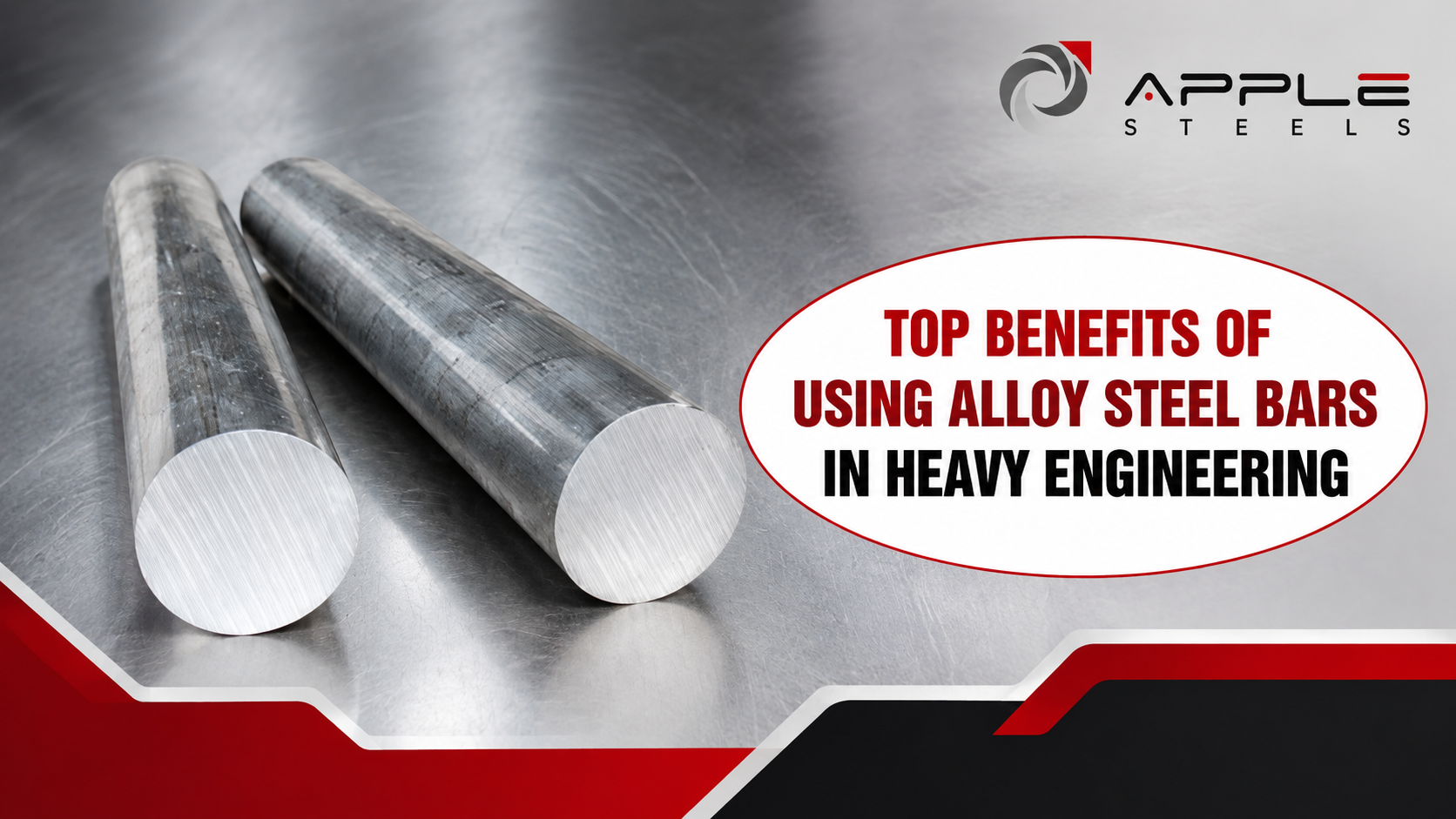
The structural integrity of heavy engineering equipment is dictated by the strength of its material. That is why manufacturers of cranes, drilling rigs and turbine components choose alloy steel bars over standard carbon steel. Alloying elements such as chromium, molybdenum and nickel raise strength, hardness, and fatigue resistance well beyond plain carbon steel under sustained load. This blog covers the benefits, applications and selection factors that matter when specifying them for demanding engineering work.
What Are Alloy Steel Bars
Alloy steel bars are carbon steel bars modified with additional elements to reach properties that plain steel cannot achieve alone. Chromium improves hardness and corrosion resistance, molybdenum strengthens the material at elevated temperatures and nickel adds toughness. Common grades include 4140, 4340 and 8620, for a variety of loading and hardness requirements. Alloy grades are more resistant to cyclic loading and are therefore specified by heavy engineering sectors for load-bearing components.
Key Benefits of Using Alloy Steel Bars
Six properties separate alloy steel bars from standard carbon steel in heavy-duty use, each addressing a specific failure mode engineers encounter in industrial equipment.
High Strength and Toughness
Higher tensile and yield strength than carbon steel lets alloy grades withstand heavy loads in structural components.
Superior Wear Resistance
Chromium and vanadium content resist surface abrasion, increasing the life of gears and rollers subjected to constant friction.
Excellent Fatigue Resistance
Alloy steel bars are resistant to cracking under repeated loads and are used in drive shafts and other rotating machinery.
Good Heat and Corrosion Resistance
These bars retain strength even when exposed to high temperatures and corrosion.
Excellent Machinability and Heat Treatability
Alloy steel bars can be machined to a clean condition and have a predictable response to quenching and tempering to achieve accurate hardness specifications.
Long Service Life & Lower Maintenance Costs
Greater combined wear, fatigue and heat resistance results in reduced replacement, reduced downtime and reduced life cycle cost.
Applications of Alloy Steel Bars in Heavy Engineering
Alloy steel bars appear across sectors where equipment faces continuous mechanical stress. The following industries account for most of that demand.
Construction & Infrastructure Equipment
Cranes and excavators use alloy steel bars in booms and frames to resist fatigue under heavy lifting.
Mining & Earthmoving Machinery
Shafts and gears need the wear resistance that these bars provide against constant abrasive contact with rock.
Oil & Gas Equipment
Alloy steel bars are used to provide strength in high-pressure and high-corrosion applications when drilling valve components and valve bodies.
Power Generation Components
Alloy steel bars are used for the turbine shafts and fasteners to keep them strong at high operating temperatures.
Automotive & Heavy Commercial Vehicles
Alloy steel bars are used for the axles and shafts in car transmissions to resist fatigue under continuous torque, load and cycling.
Industrial Machinery & Manufacturing Equipment
Rollers and tooling components use alloy steel bars where machinability and post-treatment hardness both matter.
Alloy Steel Bars vs Carbon Steel Bars
Alloy steel bars and carbon steel bars differ most in performance under sustained stress, heat and repeated loading.
| Feature | Alloy Steel Bars | Carbon Steel Bars |
| Strength | Higher | Moderate |
| Wear Resistance | Excellent | Moderate |
| Fatigue Resistance | Excellent | Lower |
| Heat Resistance | Better | Limited |
| Hardenability | Excellent | Moderate |
| Service Life | Longer | Shorter |
| Heavy Engineering Suitability | Highly Suitable | Limited |
For components under continuous mechanical or thermal stress, alloy steel bars remain the more dependable choice over carbon steel equivalents.
Factors to Consider When Selecting Alloy Steel Bars
Selecting the right alloy steel bar starts with the mechanical strength the application demands, since shafts and fasteners need different grades. The operating temperature is also important, because molybdenum-rich grades retain strength better above 300°C than standard alloys. Wear, impact conditions and exposure to corrosion determine the amount of chromium or vanadium a project needs. Requirements for heat treatment, standards to be applied and dimensional tolerances further narrow the choice.
Quality Standards and Testing for Alloy Steel Bars
Testing the material quality prior to installation can avoid costly failures. Such checks are to ensure that a bar is of the stated grade.
- The material grade of each bar is checked against its specified grade.
- The chemical composition analysis confirms the content of chromium, nickel and molybdenum.
- Mechanical and hardness testing confirm strength against grade values.
- Ultrasonic testing detects internal voids where needed.
- Dimensional inspection matches diameter and length to drawing tolerances.
- Mill Test Certificates document each batch against ASTM or EN specifications.
Why Choose Apple Steels for Alloy Steel Bars
Apple Steels stocks alloy steel bars in grades like 4140, 4340 and 8620, in sizes to suit structural, shaft and fastener applications in heavy engineering. Each batch is subject to documented quality checks, including chemical composition, mechanical and dimensional testing before dispatch. That process runs under ISO 9001:2008 certification. Engineers get direct technical support when selecting a grade for load, temperature or corrosion requirements, and stock availability keeps project timelines on schedule instead of waiting on custom mill runs.
Conclusion
Alloy steel bars hold up where carbon steel cannot, delivering the strength, wear resistance and fatigue performance heavy engineering depends on. Choosing the correct grade and confirming quality compliance protects that performance long term. Consult the Apple Steel Alloy Steel Bars page for complete grade details and technical data.