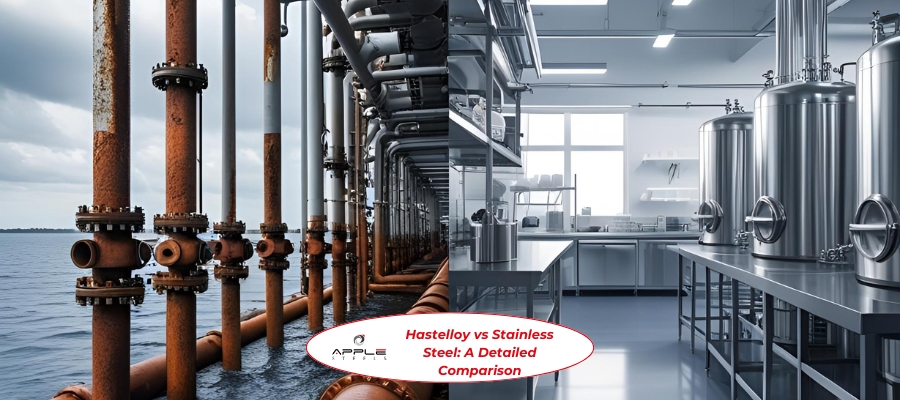
When it comes to selecting the right metal for industrial applications, Hastelloy and Stainless Steel often top the list. Both offer excellent strength and corrosion resistance, but they differ in performance, composition, and cost. This blog explores a detailed comparison between Hastelloy and Stainless Steel to help you choose the best material for your needs.
What is Hastelloy?
Hastelloy is a corrosion-resistant metal alloy primarily made from nickel, with varying amounts of molybdenum, iron, cobalt, and chromium. It is designed to withstand harsh environments such as chemical plants, marine atmospheres, and high-temperature applications.
Key Features of Hastelloy:
- Outstanding resistance to oxidizing and reducing agents
- Performs well in acidic and chloride-rich environments
- Excellent mechanical strength even under high stress
- Common grades: Hastelloy C-22, C-276, B-2
What is Stainless Steel?
Stainless Steel is an iron-based alloy with a minimum of 10.5% chromium, often alloyed with nickel, molybdenum, and other elements to enhance corrosion resistance. It is used widely in construction, medical devices, kitchenware, and piping systems.
Key Features of Stainless Steel:
- Strong resistance to rust, oxidation, and staining
- Excellent formability and weldability
- Versatile across a wide range of industries
- Popular grades: 304, 316, 321, 904L
Chemical Composition: Hastelloy vs Stainless Steel
| Element | Hastelloy (C-276) | Stainless Steel (316) |
|---|---|---|
| Nickel (Ni) | ~57% | ~10-14% |
| Molybdenum (Mo) | ~15-17% | ~2-3% |
| Chromium (Cr) | ~14.5-16.5% | ~16-18% |
| Iron (Fe) | Balance | Balance |
| Others | W, Co, Mn, C, Si | Mn, C, Si, N |
Conclusion: Hastelloy contains significantly more nickel and molybdenum, enhancing its resistance to aggressive chemicals and extreme temperatures compared to stainless steel.
Corrosion Resistance
Hastelloy:
- Excels in hydrochloric acid, sulfuric acid, and chloride environments
- Ideal for chemical processing plants, marine uses, and reactor vessels
- Resistant to pitting, stress corrosion cracking, and crevice corrosion
Stainless Steel:
- Suitable for mild acidic or alkaline conditions
- Performs well in freshwater and atmospheric environments
- Higher grades like 904L or 316L improve performance in chloride and marine applications
Winner: Hastelloy (in extreme or chemically aggressive environments)
Mechanical Properties
Tensile Strength:
- Hastelloy C-276: ~690 MPa
- Stainless Steel 316: ~515 MPa
Yield Strength:
- Hastelloy C-276: ~283 MPa
- Stainless Steel 316: ~205 MPa
Temperature Tolerance:
- Hastelloy maintains strength at elevated temperatures
- Stainless steel is ideal up to 870°C (for 316), beyond which Hastelloy excels
Result: Hastelloy offers higher mechanical strength, especially under high-stress and high-temperature conditions.
Cost Comparison
- Hastelloy is significantly more expensive than stainless steel due to its high nickel and molybdenum content.
- Stainless steel is more cost-effective for applications with moderate corrosion or structural demands.
Use Stainless Steel when cost is a concern and the environment is not too corrosive.
Choose Hastelloy for demanding, high-risk environments where material failure is not an option.
Weldability & Fabrication
Hastelloy:
- Requires specialized welding techniques
- Susceptible to heat-affected zone issues without proper control
Stainless Steel:
- Easier to weld and fabricate
- Readily available in sheets, plates, coils, and bars
- Compatible with common industrial fabrication tools
Winner: Stainless Steel, especially for routine manufacturing processes.
Applications Comparison
| Application Area | Hastelloy | Stainless Steel |
|---|---|---|
| Chemical Processing Plants | (Highly Preferred) | (with limitations) |
| Marine Environments | (Excellent) | (with higher grades like 316/904L) |
| Food and Beverage Industry | (Not common) | (Industry standard) |
| Pharmaceutical Equipment | (Specific uses) | (Widely used) |
| Heat Exchangers | (High performance) | (Good performance) |
| Construction & Architecture | – | (Widely used) |
Which One Should You Choose?
Choose Hastelloy if:
- You’re dealing with harsh chemical environments
- You need superior performance in high-temperature conditions
- Corrosion resistance is your top priority
Choose Stainless Steel if:
- You’re looking for a budget-friendly and versatile metal
- The application involves mild to moderate corrosion
- You need material that’s easy to source and fabricate
Select the Best Alloy Based on Performance and Cost
Both Hastelloy and Stainless Steel are exceptional alloys, but they serve different needs. Hastelloy is best for extreme conditions, whereas Stainless Steel is the go-to option for general-purpose and cost-efficient applications. Your choice should depend on environmental factors, mechanical demands, and budget considerations.
Understanding the unique advantages of each material will help you make smarter, long-term decisions for your project or facility.